


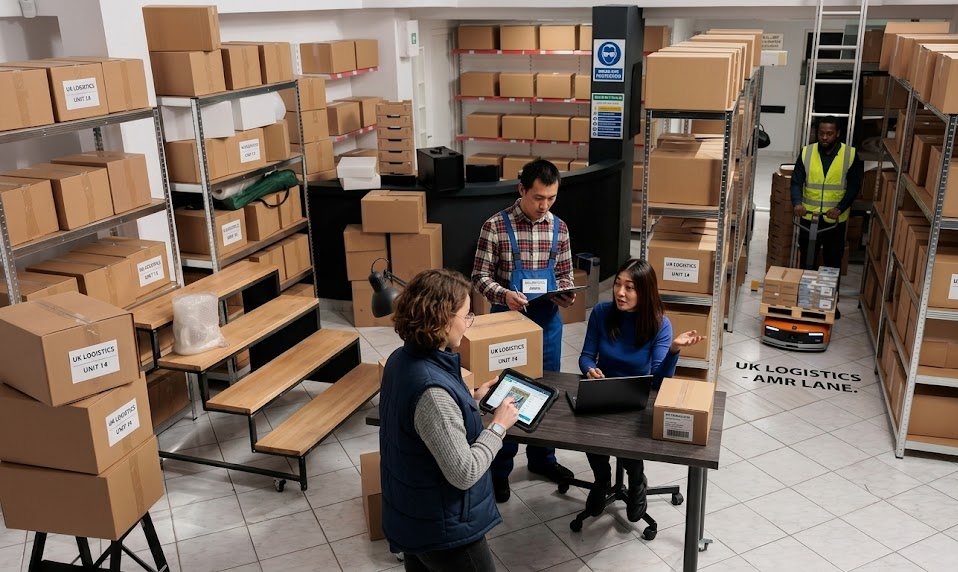

Quick commerce has developed a culture of quick deliveries. Orders must reach customers faster than ever before. For small businesses, this puts significant pressure on the warehouse. One slow pick, one broken trolley, or one missed shipment can lead to serious delays.
Warehouse logistics represent a big challenge for businesses of all sizes in 2026. Many smaller operations in the UK find that making a few targeted upgrades, rather than a complete digital overhaul, can greatly improve their output and reduce costs. The key to success lies in balancing smart software with reliable equipment.
According to Logistics UK, an effective supply chain affects more than seven million people who make, sell, and move goods across the country. This scale means that being efficient at every level, including small warehouse operations, is essential for the economy.
Whether the operation is a small fulfilment unit in Sheffield or even a busy stock room in Leeds, these five strategies help small businesses work more efficiently.
At Look in Sheffield, we help you improve your home with practical local ideas, trusted services, and the latest lifestyle trends.
Practical Methods to Streamline Warehouse Operations
Here are the five practical methods to streamline warehouse operations:
1. Predict Stock Before Problems Appear
Overstocking ties up cash. Understocking results in lost sales. Both situations are too problematic, and many small warehouse teams are still using outdated spreadsheets to manage stock.
Affordable warehouse management software such as Access Minsoft now uses simple AI to analyse sales patterns and alert you when stock levels are low. The system learns about your busy times, slow-selling items, and reliable suppliers. It presents this detail clearly, without complicated dashboards.
As a result, you will have fewer emergency orders, less unsold stock sitting on shelves, and a clearer view of what needs to be restocked each week. For small teams, this tool can pay for itself within a few months.
2. Cut Travel Time Across the Floor
Consider walking through a poorly organised warehouse, and you will see staff walking all day unnecessarily. Items that are selected together are stored apart. High-demand stock is at the back, and the packing station is on the wrong side of the building.
A HSE report found that the transportation and storage sector has high rates of musculoskeletal disorders. The average rate across all sectors is 1,800 cases for every 100,000 workers. A smarter floor layout can reduce unnecessary movement, helping lower the physical strain that contributes to these numbers.
Reviewing the floor layout is cheap and can lead to prompt improvements. By mapping out which products are usually picked together and placing them close to the dispatch area, you can reduce the distance staff walks each shift. This saves a lot of time over the course of a week.
Simple changes, such as placing fast-moving stock near the entrance and creating clear paths, lower fatigue, and reduce mistakes. A neater floor also looks more professional for visiting clients, which is a good additional benefit.
3. Upgrade Physical Equipment for Reliability
A common mistake in warehouse management is ignoring the components that move products from one area to another.
Worn wheels and poorly maintained trolleys actually slow down operations. They also cause uneven wear and tear on warehouse floors, leading to costly repairs over time. Investing in quality moving equipment can improve efficiency for small warehouse operators, but it’s often overlooked.
Using high-quality parts from experienced caster wheel manufacturers helps prevent expensive floor damage and keeps trolleys moving smoothly under heavy loads. This simple upgrade reduces the physical strain on staff and ensures that delivery schedules are not interrupted by equipment failure.
4. Save Money With Smarter Packaging
Packaging can be an area where small businesses spend too much money without realising it. Using boxes that are too big for the product inside, increases shipping expenses. Too much filler materials add weight and waste.
Right-sizing and packaging minimises material and shipping costs. Many UK couriers now charge based on volumetric weight, so smaller packages result in lower bills.
Shoppers in the UK increasingly prefer brands that are committed to reducing waste. Switching to recyclable or minimal packaging shows that your business cares about sustainability. This practical change also serves as quiet marketing.
5. Protect Staff Through Better Ergonomics
Warehouse injuries can be costly. There are immediate costs, such as sick pay and shift coverage, as well as long-term effects on team morale and stability. For small firms with few employees, a single injury can disrupt the entire operation.
You don’t need a major budget to make ergonomic improvements. Simple changes, like using anti-fatigue mats at stations, adjusting shelf heights, and providing proper manual handling training, can ease the physical strain of warehouse work. Clear signs, marked walkways help staff move safely during busy times.
Businesses that care about their employees tend to keep them longer. High turnover is a hidden cost of poor working conditions. It can drain small warehouse operations that can’t afford to hire new staff frequently.
For a more precise understanding of where to start, take a look at this practical guide on reducing warehouse health and safety risks. This covers ergonomics, manual handling, and staff protection in straightforward terms.
Conclusion
Small warehouse operations can stay competitive without overspending. Smarter stock software, better floor layouts, reliable equipment, simplified packaging, and prioritised staff wellbeing improve efficiency without the need for expensive automation.
Start by choosing one area to improve, measure the results, and then expand to other areas. Every small warehouse can benefit from these small, gradual improvements.
Have a question or want to share your own experience? Get in touch with us at Look in Sheffield, and we would love to hear from you.